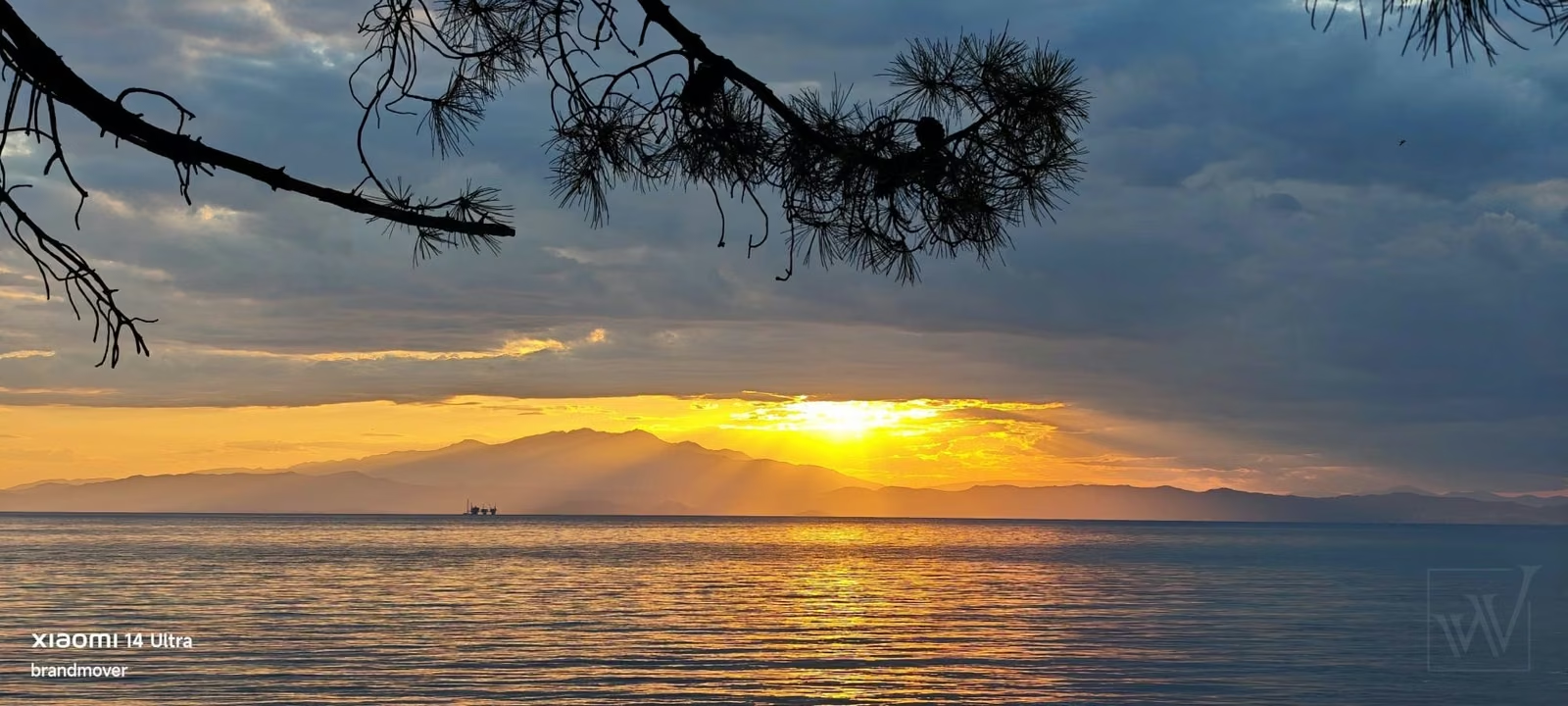

Ferries, freddo espresso, marble coves, and a sunset that refused to be rushed — a week of slow living on the Aegean’s greenest island.
The road to Thassos is half the story. From Burgas, we crossed the Rhodope mountains through the Makaza pass — traffic, hairpin bends, and then, suddenly, everything opens up: pine ridges give way to plains, the plains give way to sea. By the time the ferry pulled away from Keramoti, gulls trailing the wake, we already knew this was going to be a week for slowing down. Thassos doesn’t do flashy. It does stone villages, wild coves, and beaches you sometimes get entirely to yourself.
Trip Snapshot
- Region: Thassos, northern Aegean, Greece
- Best base: The west coast, near Skala Rachoni or Skala Prinos — within easy reach of both the Ariba/Rachoni beaches and the southwest coves
- Ideal length: 7 days, extendable with a stop in Kavala on the mainland
- Best season: Late June to September; July for the calmest seas and warmest water
- Who it’s for: Couples who want beach days, mountain villages, and at least one boat sunset, without needing a full resort
- Vibe: Slow mornings, marble coves, stone villages, unhurried sunsets
Why Thassos Feels Different
Thassos is small enough to circle by car in a day, but it doesn’t feel small once you’re in it. The coast keeps changing character — wild and rocky in the southwest, gentle and pebbled elsewhere — and the interior is its own world entirely: stone villages, olive groves, and mountain roads that see almost no traffic. We split our week between the two, and neither ever felt like a detour from the other.
The Southwest Coves: Klisma and Crusoe Bay
A beach near Klisma tavern, on the southwest coast, became “ours” for an afternoon — crystal water, smooth pebbles, and no one else around. We also made a quick stop at Giola, the natural rock pool everyone photographs mid-jump, but ours was too algae-clouded to swim in that morning, and honestly it didn’t earn the hype for us — worth checking recent conditions before building a whole morning around it.
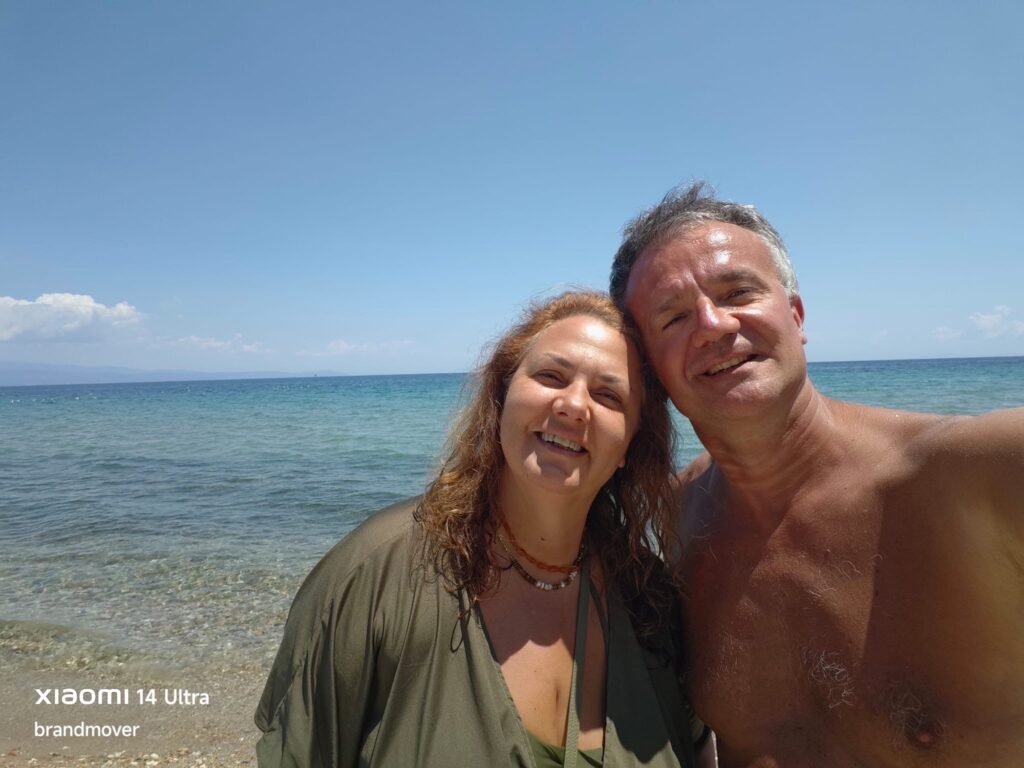
Crusoe Bay, further along the coast, was the standout of the whole week: wild, unmanicured, and the best snorkeling we found on the island — fish, sea urchins to watch your step around, and only a handful of umbrellas already claimed even at a reasonable hour.
The Mountain Villages: Kastro, Panagia, Potamia, and Kazaviti
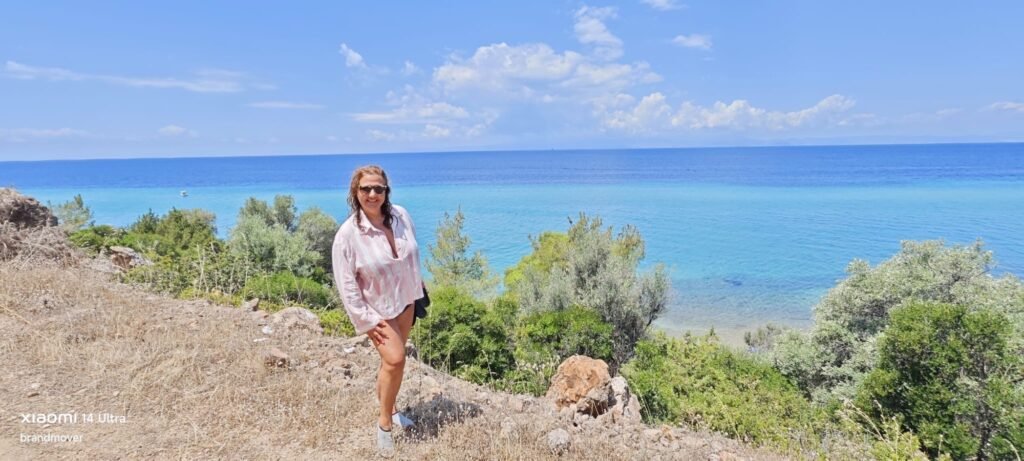
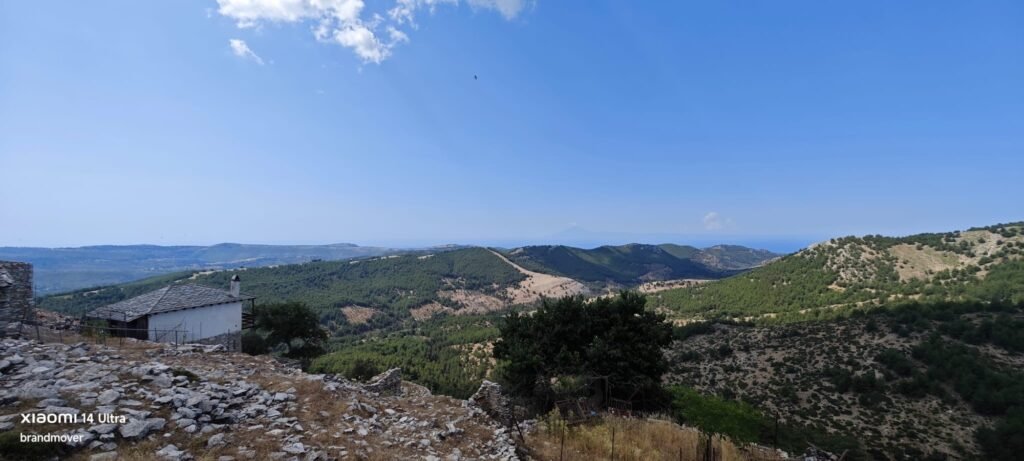
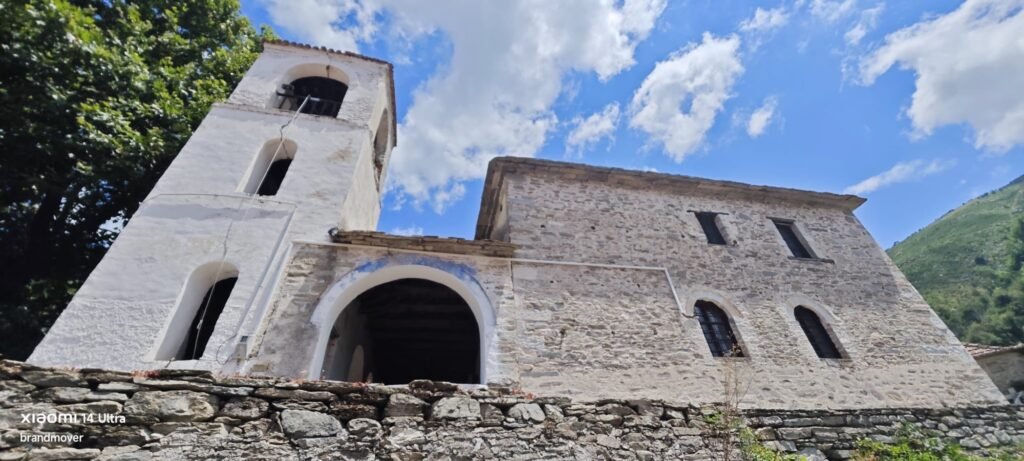
Kastro, the abandoned stone village sitting at 450 metres, was the quietest place we found all week — panoramic views over the island and not another person in sight. Down in Panagia, the freddo espresso ritual continued at a village café, followed by a look inside the local church and an old olive-oil factory turned museum.
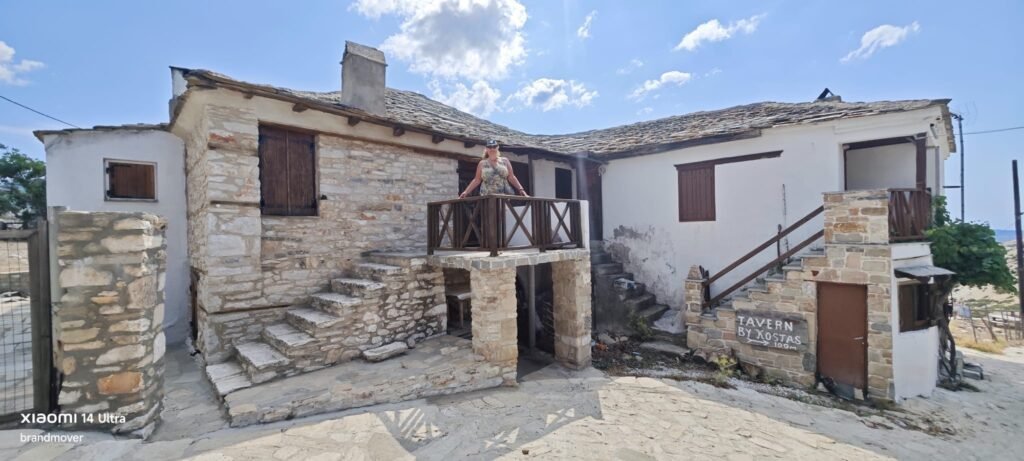
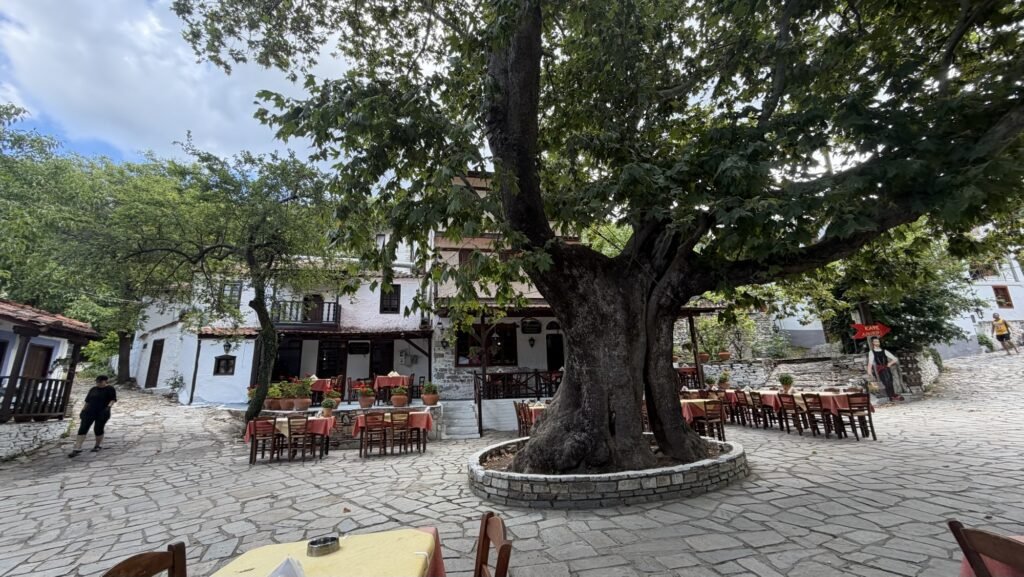
In Potamia, we found a small museum dedicated to Polygnotos Vagis, the Thassos-born sculptor who built his career in New York before the island claimed his legacy back. Lunch that day was in Kazaviti, a genuinely picturesque stone mountain village — the kind of place where you order slowly because there’s nowhere else to be.
The West Coast: Arriba, Rachoni, and the Sunset Boat
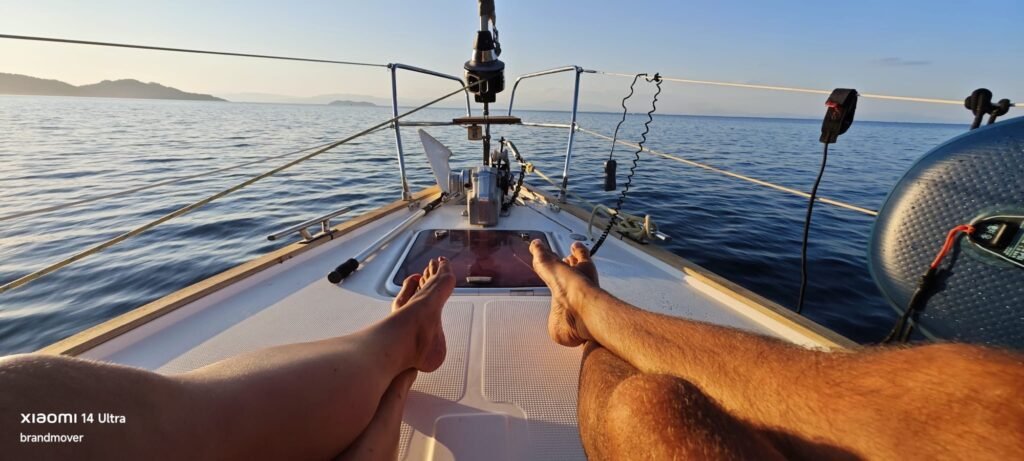
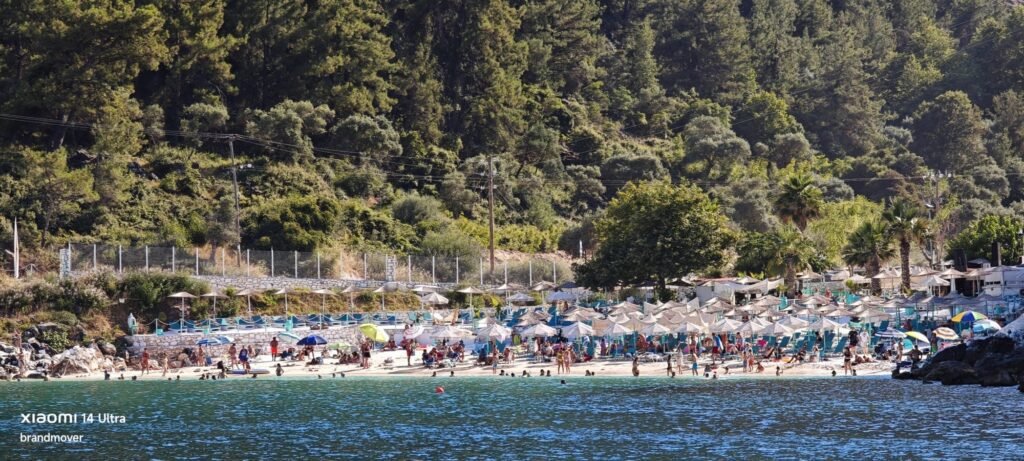
Ariba Beach and Rachoni gave us our deliberate rest day, paired with dinner at Taverna Drosia — easily one of the best meals of the trip. From Thassos Town, a private sunset cruise took us to Marble Beach and Vatos Beach for swim stops, before the boat slowed right down on the return leg and let the sunset do the talking.
Our Beach Ranking
- Crusoe Bay — the clear winner. Wild, untouched, and the best snorkeling on the island.
- Klisma — crystal water, smooth pebbles, and quiet even in peak season.
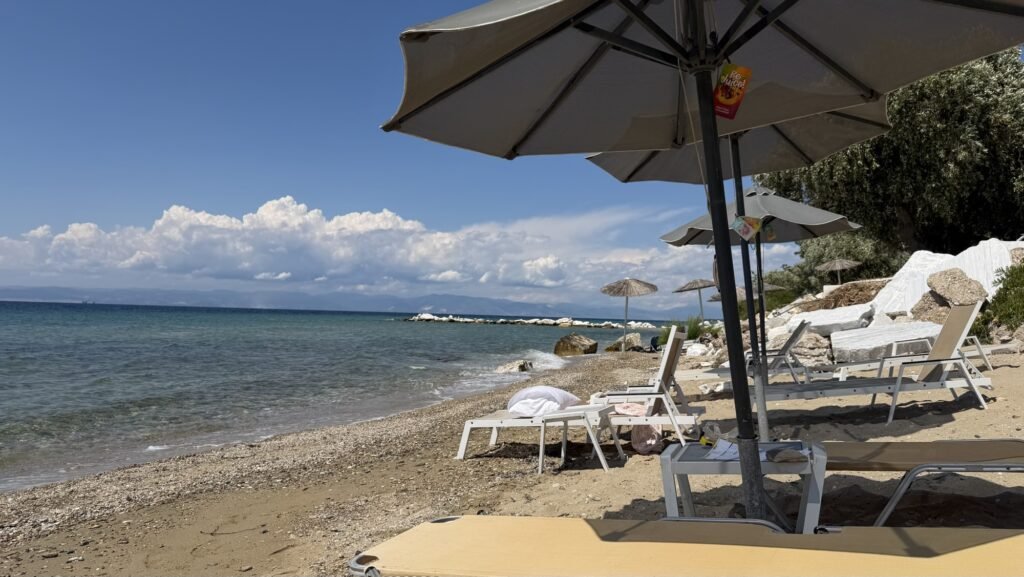
- The beach south of Skala Sotiros — a solid, easy option on the west coast, less dramatic than the first two but reliably calm and uncrowded.
How to Zone This Trip
Zone 1 — The Southwest Coast
Give this a full day. Klisma cove and Crusoe Bay sit within a short drive of each other and are worth the bulk of your beach time on this side of the island; each rewards arriving early for shade and empty umbrellas. Bring water shoes; this stretch is pebbles and rock, not sand.
Zone 2 — The Mountain Interior
Plan a full loop day through Kastro, Panagia, Potamia, and Kazaviti. None of these villages need more than an hour or two, but the driving between them is slow and scenic, and it’s worth not rushing it. This is also where the island’s only real museums are, so it’s the natural home for a rainy morning.
Zone 3 — Ariba, Rachoni, and Skala Rachoni
Also on the west coast, a short drive north of Zone 1. Ariba and Rachoni are built for a no-plans day: beach, then beach, then dinner. Taverna Drosia is worth building the evening around.
Zone 4 — Thassos Town and the Sunset Boat
Base an evening around the sunset cruise out of Thassos Town. Book directly with the operator, confirm the swim stops in advance (ours were Marble Beach and Vatos Beach), and don’t schedule anything after — the return leg is deliberately slow, and you won’t want to rush off the boat.
Getting There & Getting Around
We drove from Burgas, crossing into Greece via the Makaza pass — expect traffic at the border and mountain roads the rest of the way. From the mainland, car ferries to Thassos run from Keramoti (shortest crossing) and Kavala. A car is essential on the island itself: the coast road circles Thassos in about two hours without stops, but the mountain villages and coves both require their own detours off it.
- From Burgas: Via the Makaza pass and the Greek mainland to Keramoti, then the car ferry to Thassos (plan for a full travel day)
- On the island: A car is non-negotiable — public transport won’t reach the coves or mountain villages on any useful schedule
- By boat: Sunset and day cruises depart from Thassos Town; book directly with the operator where possible
Where We Ate
Klisma Tavern- West coast, Beachside lunch, private-beach access
Village café Prinos – Freddo espressoCafé
Panagia village – Freddo espresso, village square
Taverna, Kazaviti- Kazaviti village, Mountain-village lunch
Taverna Drosia- Rachoni, Dinner — highlight of the trip
Taverna Vicky – Near Hotel Iraklis, Lunch & dinner — best tavern discovery for summer 2026 near our hotel
Gorgona Taverna – Skala Rachoni, Beachside taverna
Grifoneri – Skala Rachoni, Glifoneri beach, Beachside taverna”In-house” dinners
Hotel Iraklis- Two simple dinners with produce from the nearby supermarket
Where We Stayed
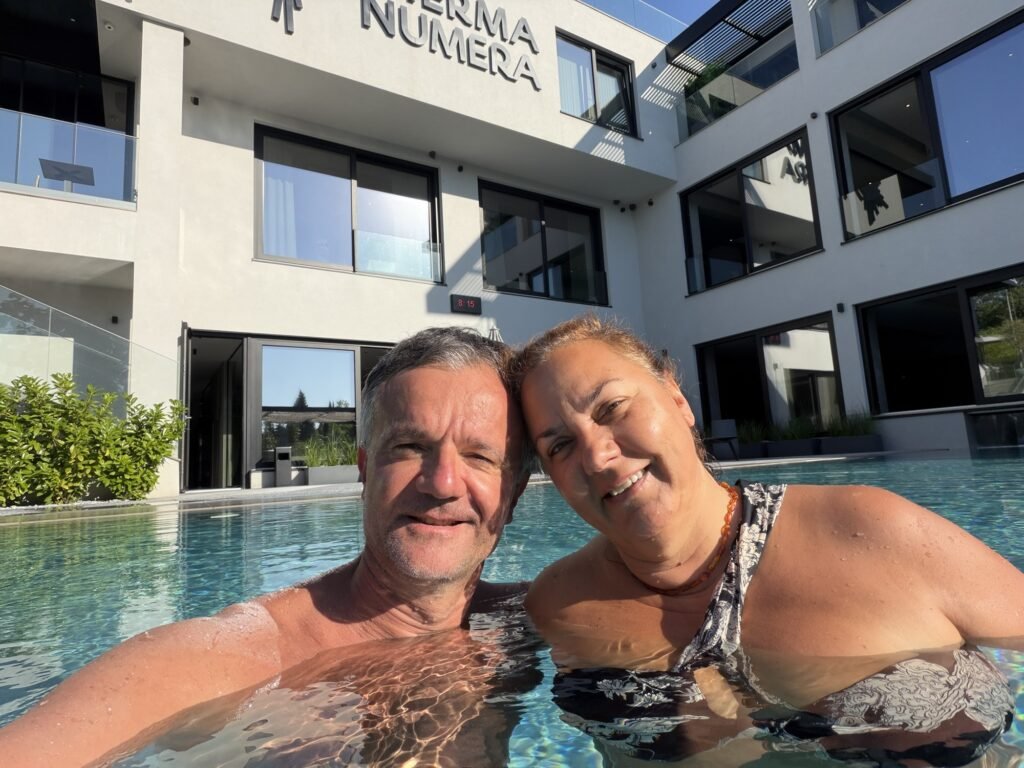
Our previous base had been Sinemorets, on Bulgaria’s southern Black Sea coast, so the drive to Keramoti was already a long one before we’d even crossed the border. We built in a one-night stop at Therma Numera, an adults-only hotel in Vetren village near Burgas — a genuinely cool, design-forward stay that made for a proper rest before the Makaza pass and the rest of the drive to the coast.
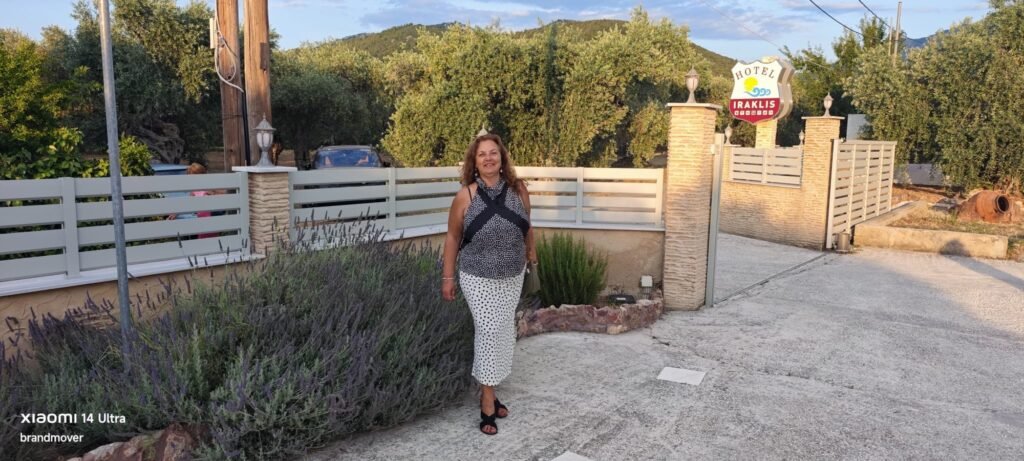
On Thassos, we stayed at Hotel Iraklis — a basic hotel, but clean, comfortable, and well-placed for the driving loops we had planned. Not a luxury stay, but exactly what a beach-and-village-hopping week actually needs: a reliable bed and a straightforward base.
What It Costs
- Adults-only hotel, Vetren (Therma Numera): mid-range, boutique pricing — worth it for the pre-ferry stopover
- Basic hotel, Thassos (Hotel Iraklis): budget-friendly, clean and comfortable
- Car ferry, Keramoti–Thassos: modest per-vehicle fee, varies by car size and season
- Sunset boat tour with Private Cruises: mid-range per person, worth booking direct
- Tavernas: village lunches and dinners were consistently affordable, especially away from the beach-bar strips
What We Loved
- 450 metres of total silence at Kastro, with no one else around
- Sea urchins and empty umbrellas at Crusoe Bay, best snorkeling of the week
- Wine, music, and dancing on the slow return leg of the sunset cruise
- A beach near Kazaviti shared with exactly one other person
- Taverna Drosia and the lunch at Vicky — the two meals we’d go back for on their own
What We’d Do Differently
- Skip Giola unless conditions are confirmed clear — it wasn’t worth the early start on our visit
- Budget an extra half-day for the mountain villages; Kastro, Panagia, and Kazaviti each deserved more lingering than our loop allowed
- Confirm the sunset boat’s swim stops and departure point in advance, since operators vary
Reviews & Reputation: What Others Say
Thassos is consistently described as one of the greener, quieter Greek islands — praised for its forested interior, marble coastline, and villages that still function as villages rather than backdrops. The most common note from other travellers is that the island rewards renting a car over relying on buses, since the best coves and villages sit off the main routes.
Packing Essentials for This Trip
- Water shoes — much of the southwest coast is pebbles and rock, not sand
- Snorkel mask, especially for Crusoe Bay
- Reef-safe sunscreen
- A light layer for the sunset boat — it cools quickly once the sun’s down
- A dry bag for the boat tour
- Cash for the smaller village tavernas
Frequently Asked Questions
Do you need a car on Thassos?
Yes. The coast road circles the island in about two hours, but the mountain villages and the best coves both require detours off it that public transport doesn’t reliably cover.
What’s the best beach for snorkeling?
Crusoe Bay, by a clear margin — wilder and less developed than the more popular beaches, with better visibility and more to see.
Is the sunset boat tour worth it?
Yes — book directly with the operator, confirm the swim stops in advance, and don’t plan anything for right after. The slow return leg is the best part.
Where should we stay?
It depends on your route. If you’re driving from Bulgaria, an adults-only stop like Therma Numera in Vetren makes a relaxed staging point before the ferry. On the island itself, base yourself on the west coast, near Skala Rachoniou — a simple, clean stay like Hotel Iraklis is enough, since you’ll spend most of your time out at the coves and villages anyway.
Looking for more slow, experiential routes along the Aegean and beyond? Explore the rest of VellyWay’s experiences for our next hidden corner.